
THE LEARNING ARCHIVES
Whether you're creating maps for a novel, rpg, or just for fun, this collection of tutorials and map tips will help you create more professional and believable maps for your story!

Where to Place Rivers on Your Fantasy Maps
Rivers are likely an essential feature for the fantasy world you’re creating. Water is vital for life as we know it, not only for survival but transportation or trade. Understanding where to place them on a map is challenging if you don't want it to appear arbitrary. But if you grasp how water moves through a landscape, it will go a long way toward creating a sense of realism for your maps and worldbuilding.
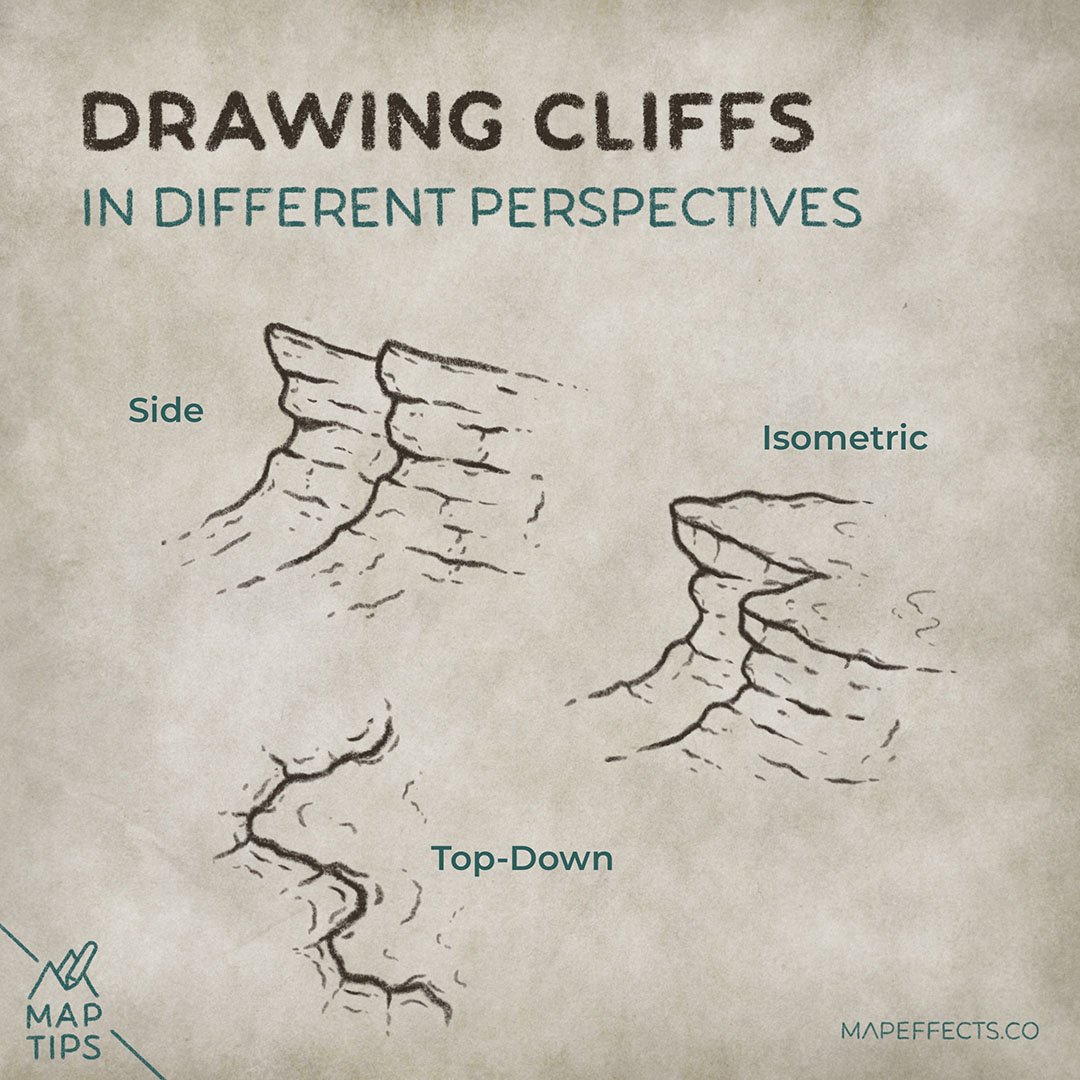
Drawing Cliffs in Different Perspectives
When you sit down to draw a fantasy map for your story, one of the first things to decide is the perspective you’ll use. The most common tend to be isometric and top down, but which should you use? Here we will look at some of the benefits of each using something like cliffs to show some of the differences.

Drawing Deltas on Your Fantasy Maps
Deltas are a key source of agriculture for civilizations due to their nutrient rich soils. One of the key things that allowed Egypt to rise to and maintain power for so long was their acess to the Nile River and it’s delta. Now, lets look at how they form so you can realistically add them to your fantasy maps.
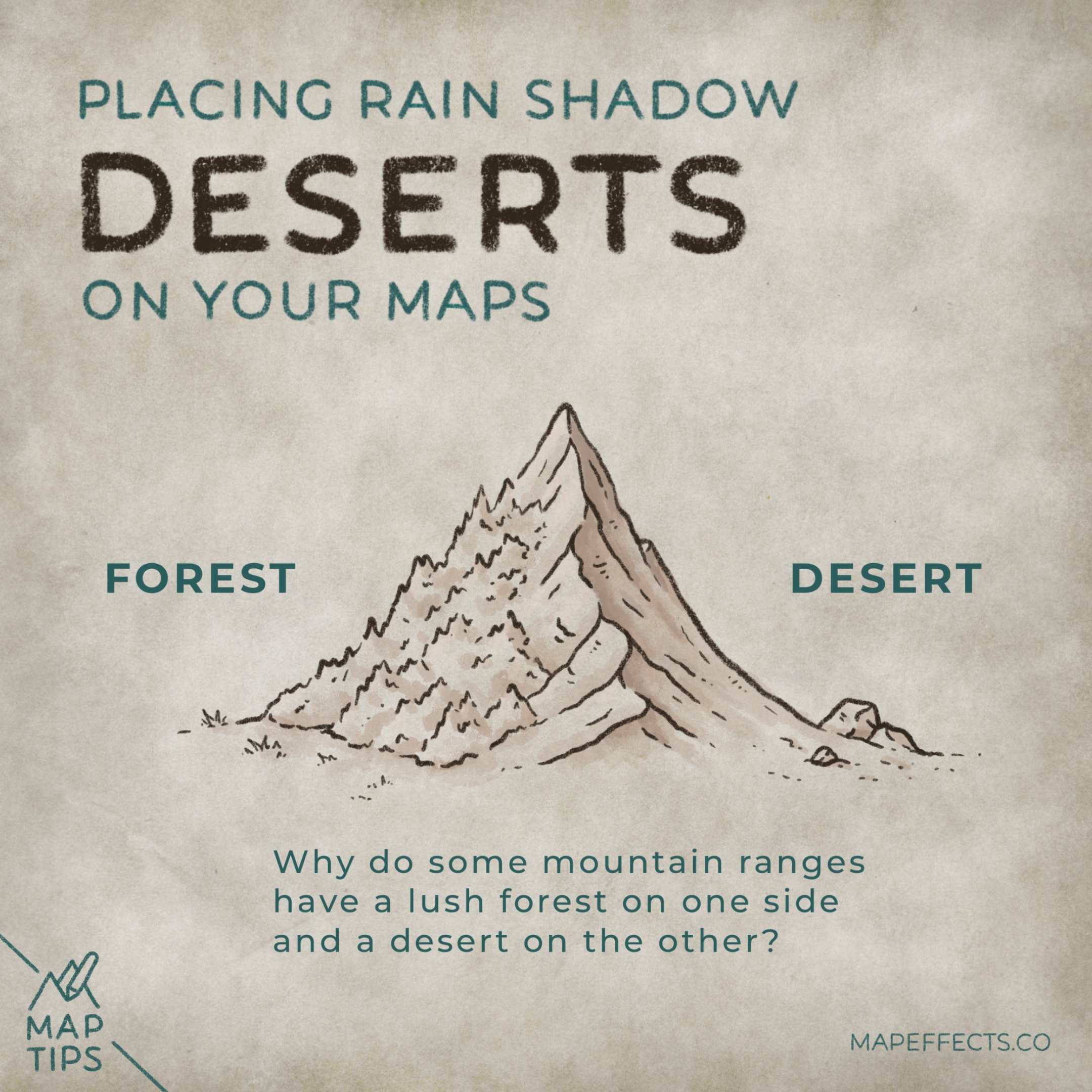
Placing Rain Shadow Deserts On Your Fantasy Maps
Why do some mountain ranges have a lush forest on one side and a desert on the other? In this Map Tip we’ll look at how a rain shadow desert can form so you can draw them on your own maps.
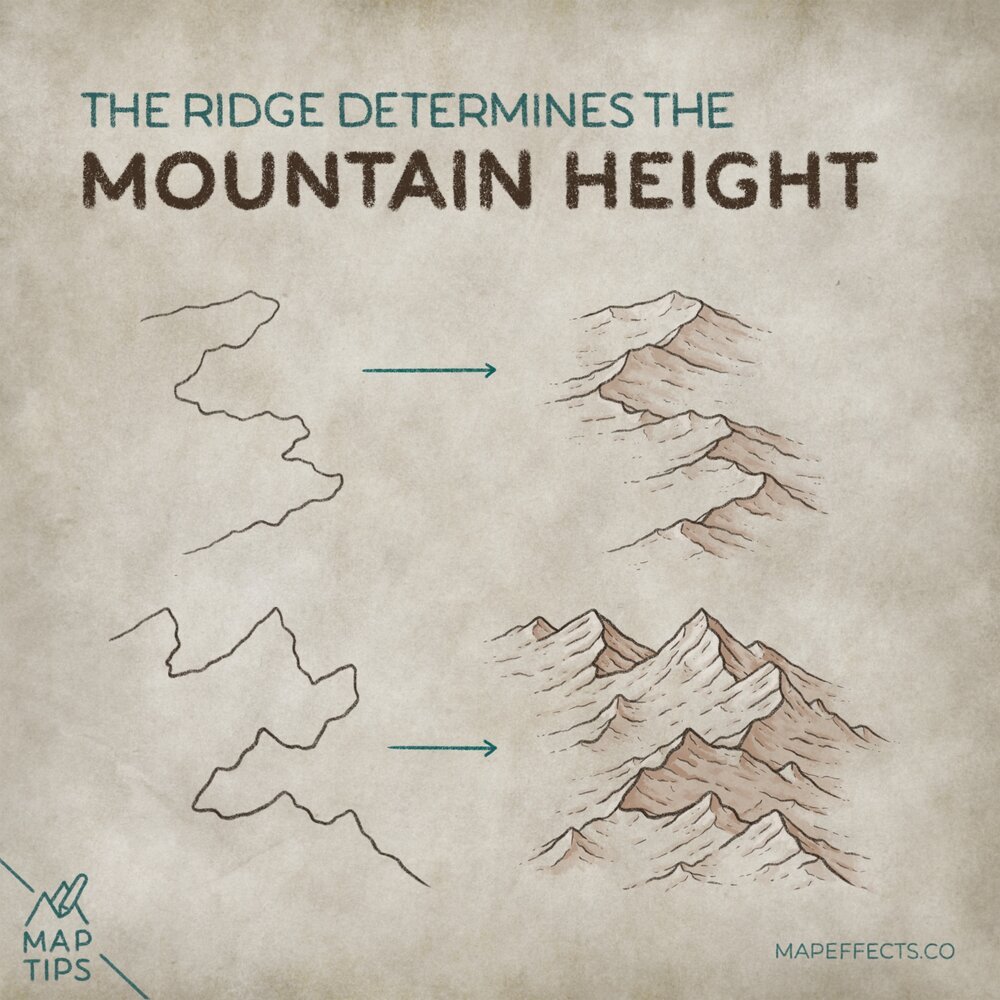
The Ridge Determines Mountain Height
One way to make your fantasy map more believable is to vary the size of the mountain ranges. Not all mountains in our world are the same height, and they shouldn’t be in your story either. If you are using the Ridgeline Mountain Method, then how you draw the initial ridgeline will play a large role in how your mountains look when they’re finished.
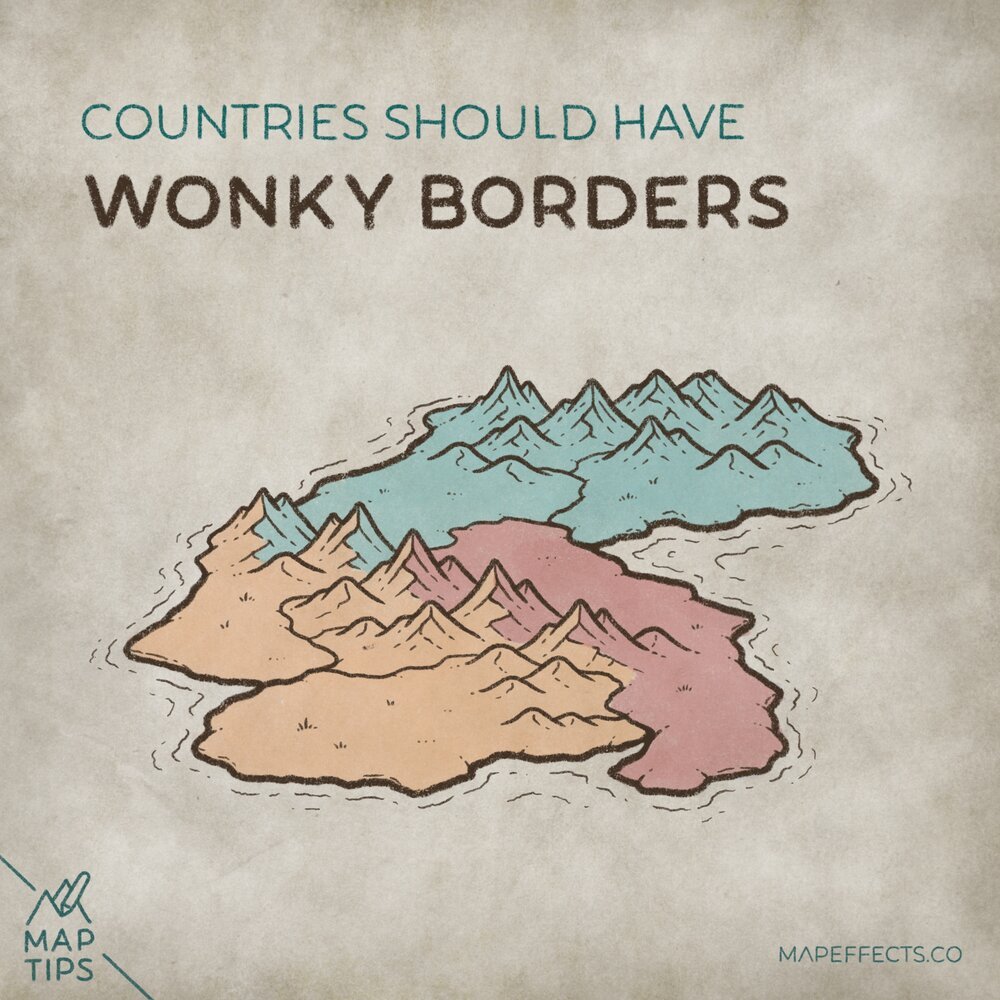
Countries Should Have Wonky Borders
One mistake people often make when drawing maps is they make their borders look like a geometric grid. In reality, this reflects a relatively modern way of thinking. With the ability to see our world from an airplane or even space, we tend to want to divide things up in very clean, simple boxes. But, if you were on the ground and the best you could do was climb a mountain to get a read on the land, then how would you divide up borders?
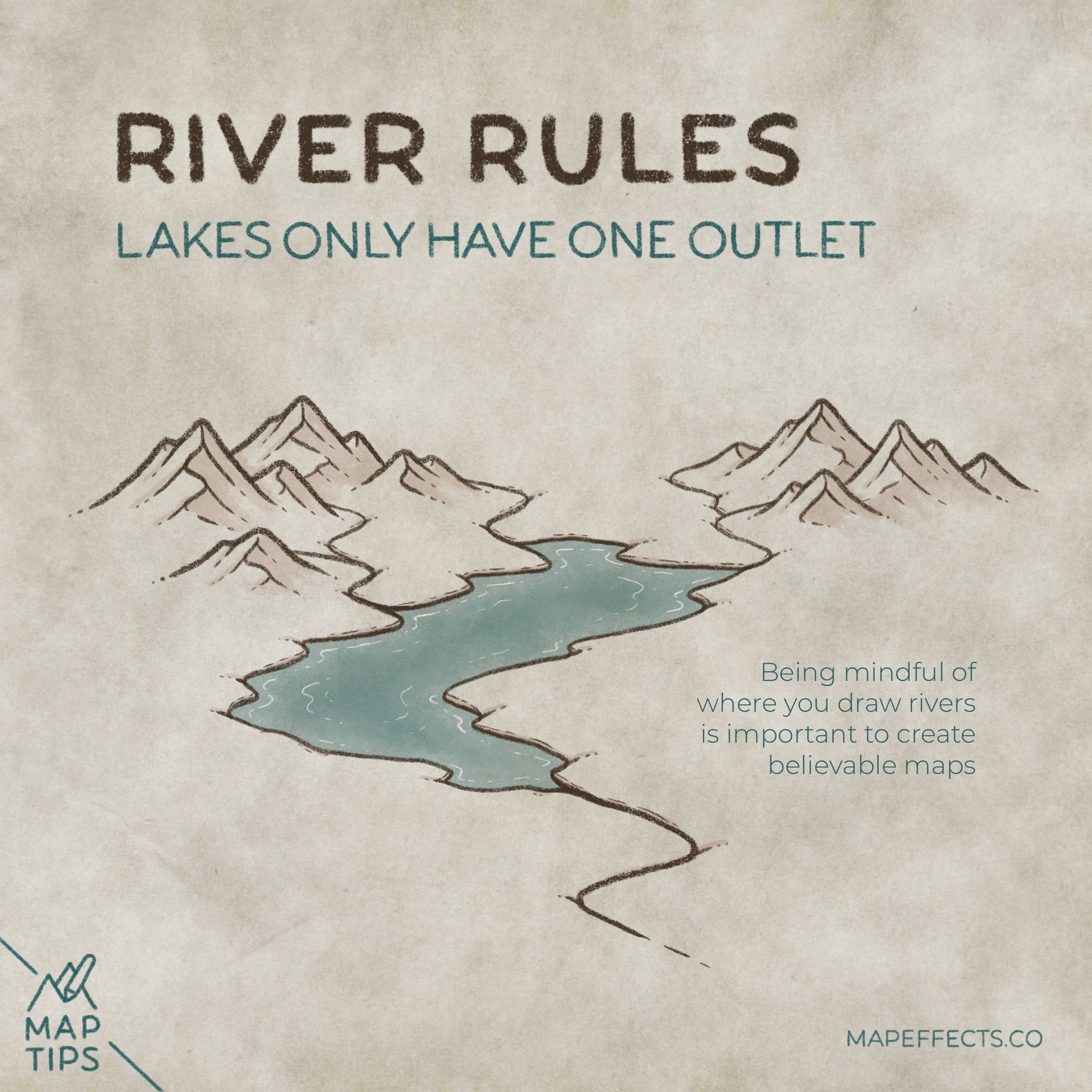
River Rules - Lakes Only Have One Outlet
Rivers are one of those tricky things to draw correctly on a map because they’re almost too familiar; we don’t usually spend much time thinking about how they actually flow through a landscape. In this case, it’s how rivers interact with lakes and how being mindful of this when you draw your maps can go a long way in making your world more believable.
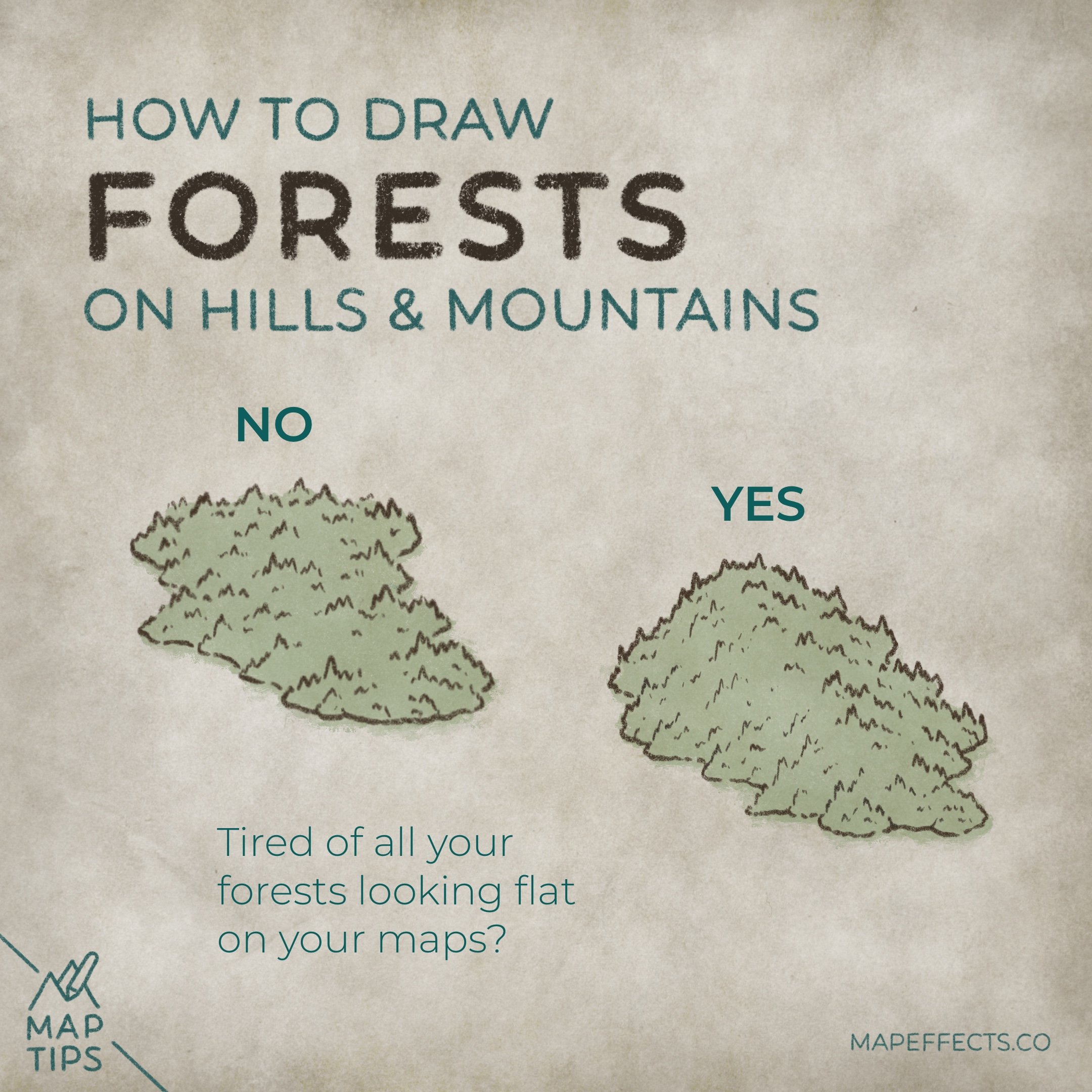
How to Draw Forests on Hills & Mountains
Are you tired of your forests on your fantasy maps looking a little too…flat? This is a common issue and one I know I struggled with for a long time as I was learning. In this Map Tip I’ll give you a couple of simple things you can do to overcome this issue, and draw forests that look like they’re popping off the page just with line art.
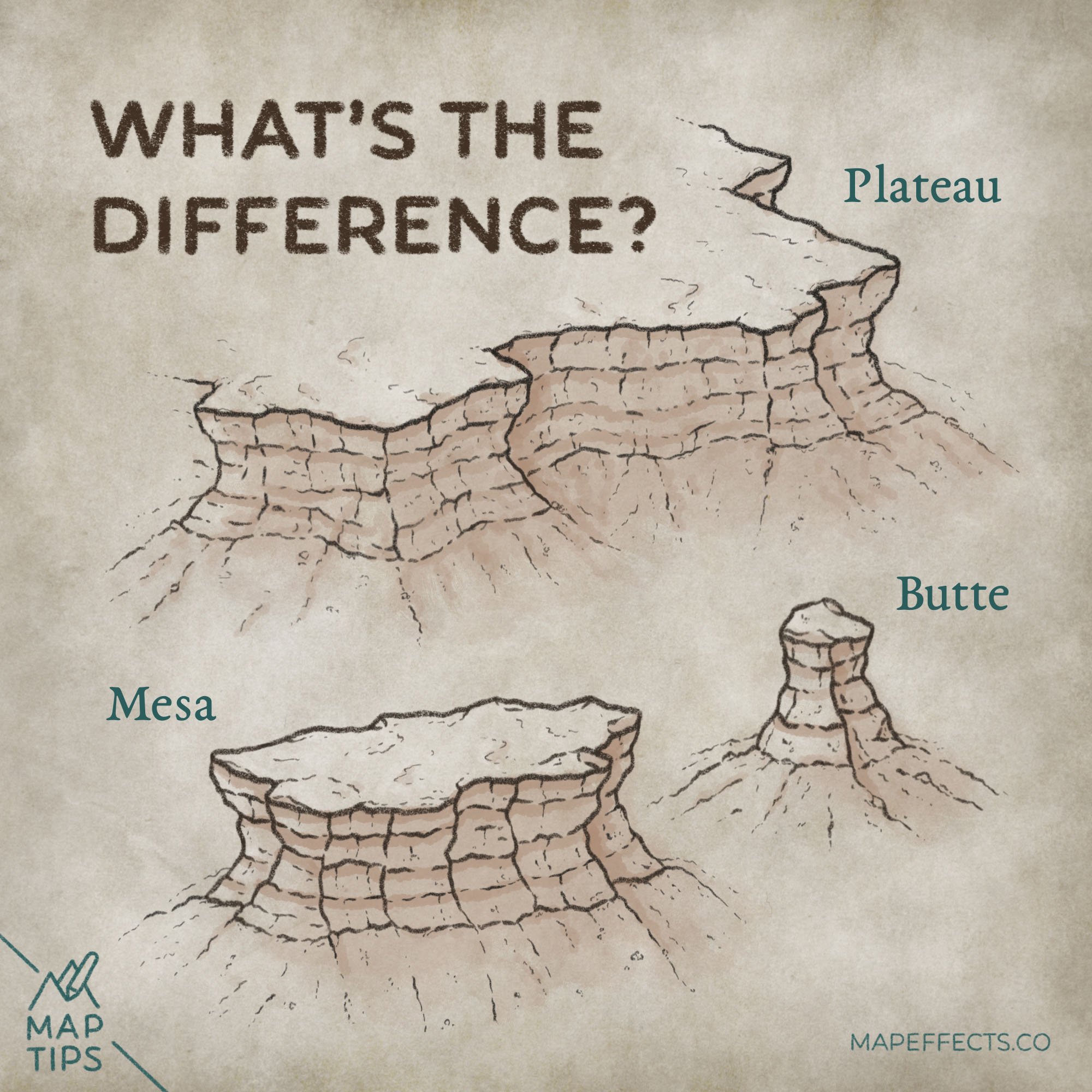
Plateaus, Mesas, & Buttes - What’s The Difference?
Plateaus, mesas, and buttes can look very similar and it can be a challenge to know the difference. Things become even more confusing when you listen to the average person describe these cliff formations, because they’ll often use the names interchangeably. So how can you tell the difference so you know what to name them on your fantasy map? Much of it comes down to the overall size, but there are a couple other things simple things to keep in mind which will help you distinguish them.
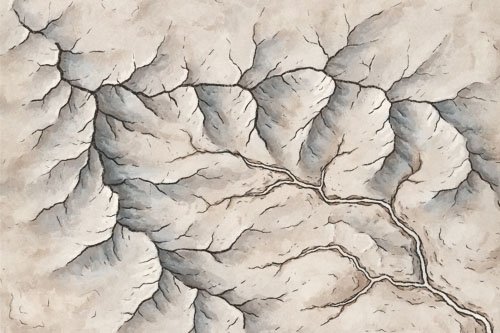
How to Draw Mountains in Top-Down Perspective
One of the most important features on fantasy maps are the mountains. Not only are they prime real estate for dwarves and dragons, but they play an important role by impacting political borders, travel, and even weather patterns.
But, they can be challenging to draw in a top down perspective and still get a good sense of scale and depth. While it is much easier to accomplish this in an Isometric Perspective, there are ways to really make your mountains pop off the page. So let’s start mapping!
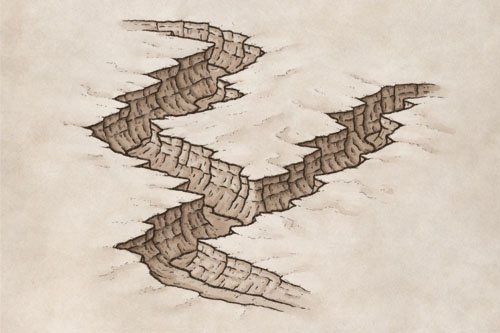
How to Draw a Canyon
Canyons are a striking feature of any landscape and can really be a focal point in the story you're telling. In this tutorial, you will learn how to draw canyons that bring a sense of depth to the landscape and make your fantasy map really stand out.
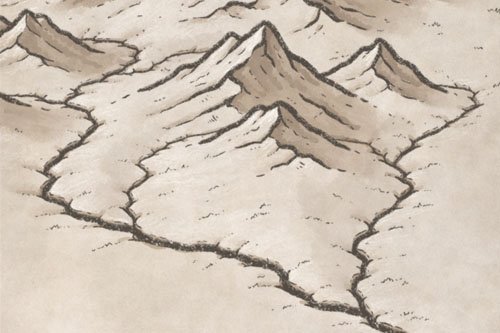
How to Draw Rivers
How do you make your rivers stand out so they’re more than just a squiggly line on your map? In this tutorial, you will learn how to draw rivers that have a sense of depth and look like they are actually part of the landscape.
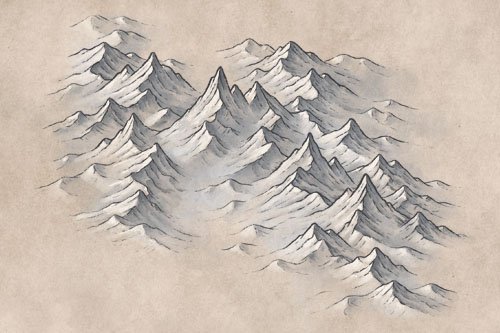
How to Draw Ridge-line Mountains
Mountains are an important feature of a map as they impact weather patterns, where rivers flow, and ultimately where cities and nations arise. In this tutorial, you will learn how to draw mountains for your fantasy maps using the ridge-line method. If you love fantasy style mountains but want to push them to have a little more realism, then this technique is for you.
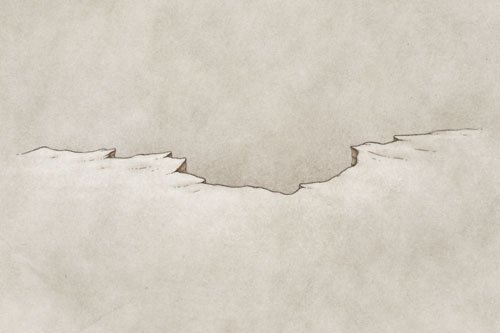
How to Draw a Cliff Drop-Off
How do you draw a cliff that is facing away from you on your fantasy map? If you have ever drawn a plateau, canyon, or chasm but wanted it facing away from you, then you know this can be a challenge. In this tutorial I'll share some simple tricks you can use on your maps.
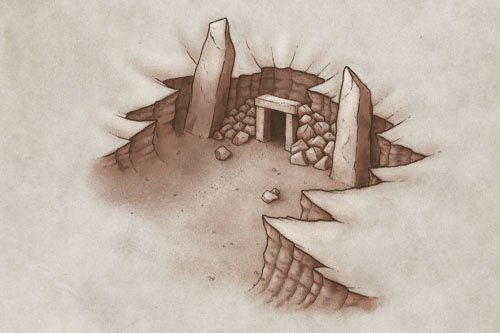
How to Draw Tombs
Drawing a tomb on your map is a great way to add intrigue and a sense of history to your world. They are a compelling feature that gets your imagination going and asking questions, which is exactly the reaction you want from a viewer. In this tutorial, you will learn how to easily draw a tomb on your maps.
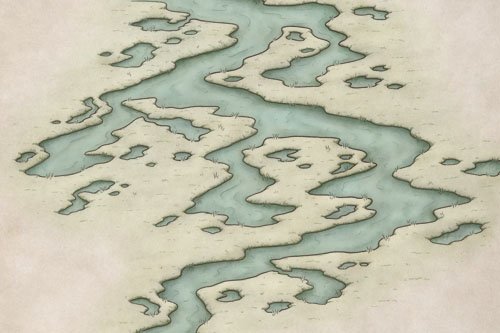
How to Draw Marshes & Wetlands
One of the most iconic locations in The Lord of the Rings has to be The Dead Marshes. Marshes have such an iconic look with their pools and streams weaving between tall grasses over a vast landscape. They can be a place of life and biodiversity or a place of threat and danger like they were in Middle Earth. In this tutorial, I will break down the process I use so you can add some marshy wetlands to your fantasy maps.
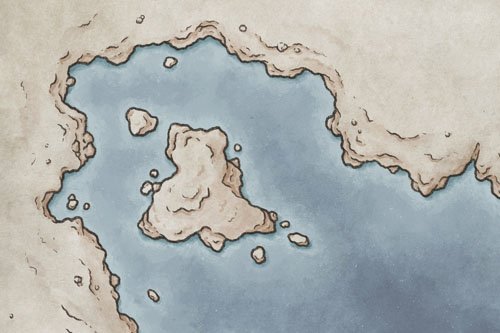
How to Shade Oceans & Seas on Your Maps
In this tutorial I want to show you how to give your oceans & seas a little more character. Not only will you get a nice painterly texture, but this method is also a great way to hint at the topography just below the water’s surface.
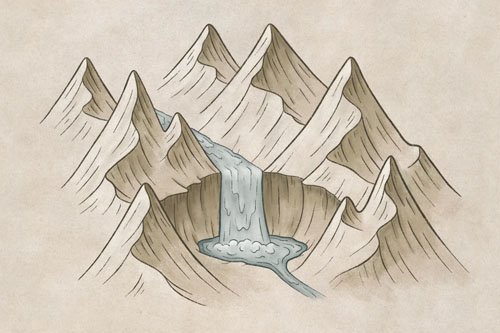
How to Draw a Waterfall
How many of us have hiked for miles just to see a waterfall? Even if you haven’t, it’s not difficult to recognize the beauty and power that so many find compelling. This is why they are such an interesting feature to include on your fantasy maps. In this tutorial, you will learn some simple steps to walk you through how to draw a waterfall on your map for your next rpg or book. Let’s start mapping!
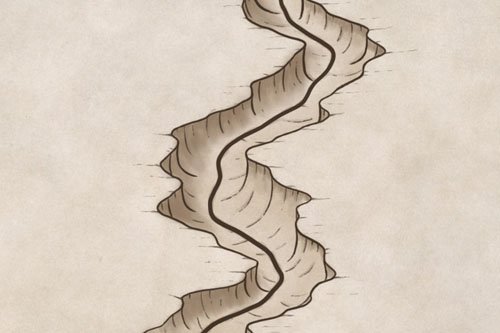
How to Draw Canyons
Drawing canyons on your maps is a great way to make the terrain a little more interesting and add depth to the landscape. At first glance, you might think they are difficult to draw, but with a few simple principles, you can start adding canyons to your own fantasy maps.
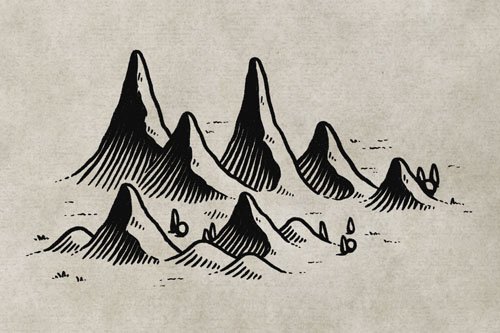
How to Draw Classic Fantasy Mountains
Want to learn how to draw a more classic style of mountains on your fantasy maps while still feeling unique? This method of drawing mountains is a great way to give a more classical pen and ink feel to your maps!