
THE LEARNING ARCHIVES
Whether you're creating maps for a novel, rpg, or just for fun, this collection of tutorials and map tips will help you create more professional and believable maps for your story!
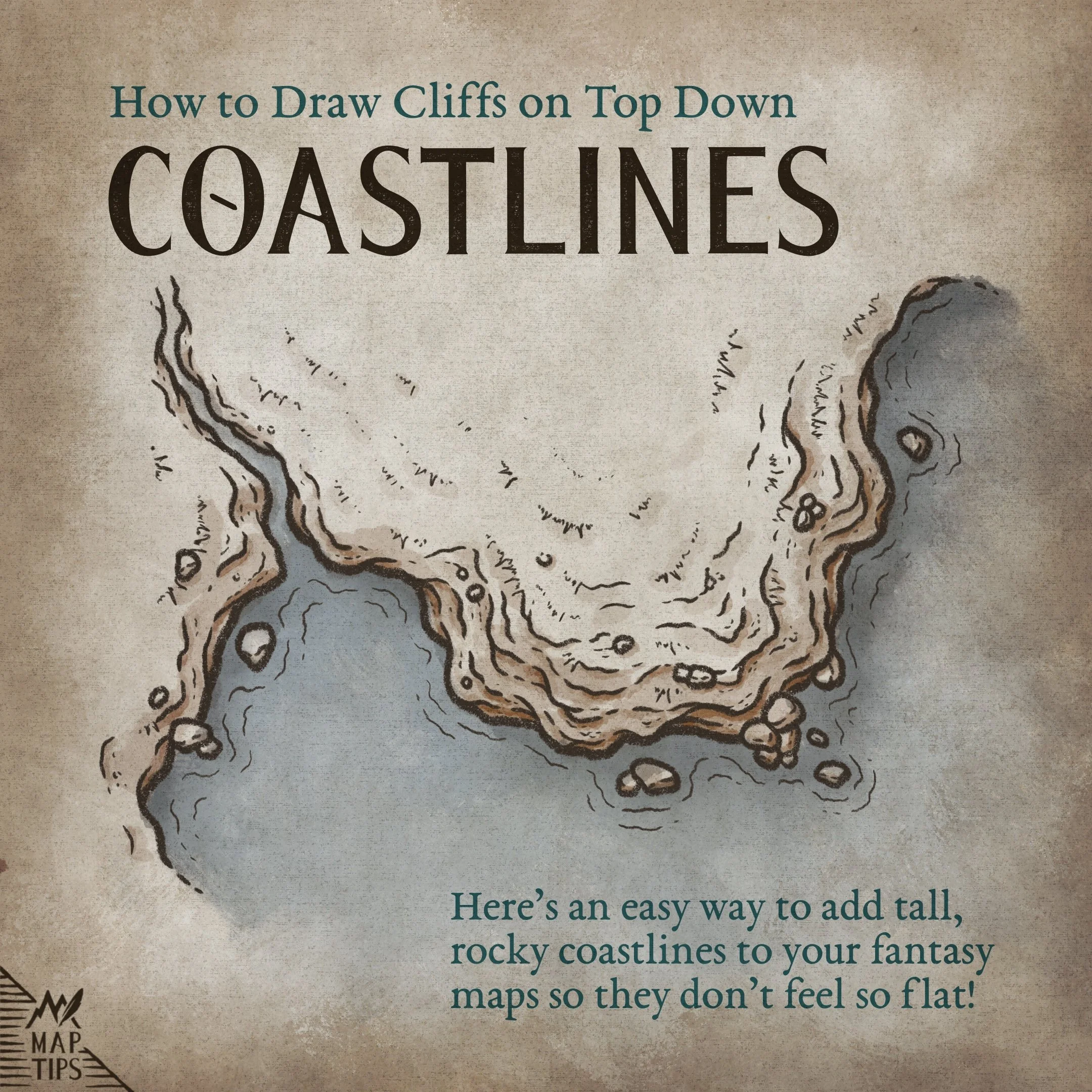
Drawing Cliffs on Coastlines in Top Down Perspective
One of the biggest challenges with fantasy maps in a top down perspective is they tend to look a bit flat. Fortunately, there are some simple tricks you can use to build up the layers of the landscape to give a sense of depth. In this Map Tip we’ll be looking at how to draw cliffs on a coastline in this perspective and make them really stand out in your map.
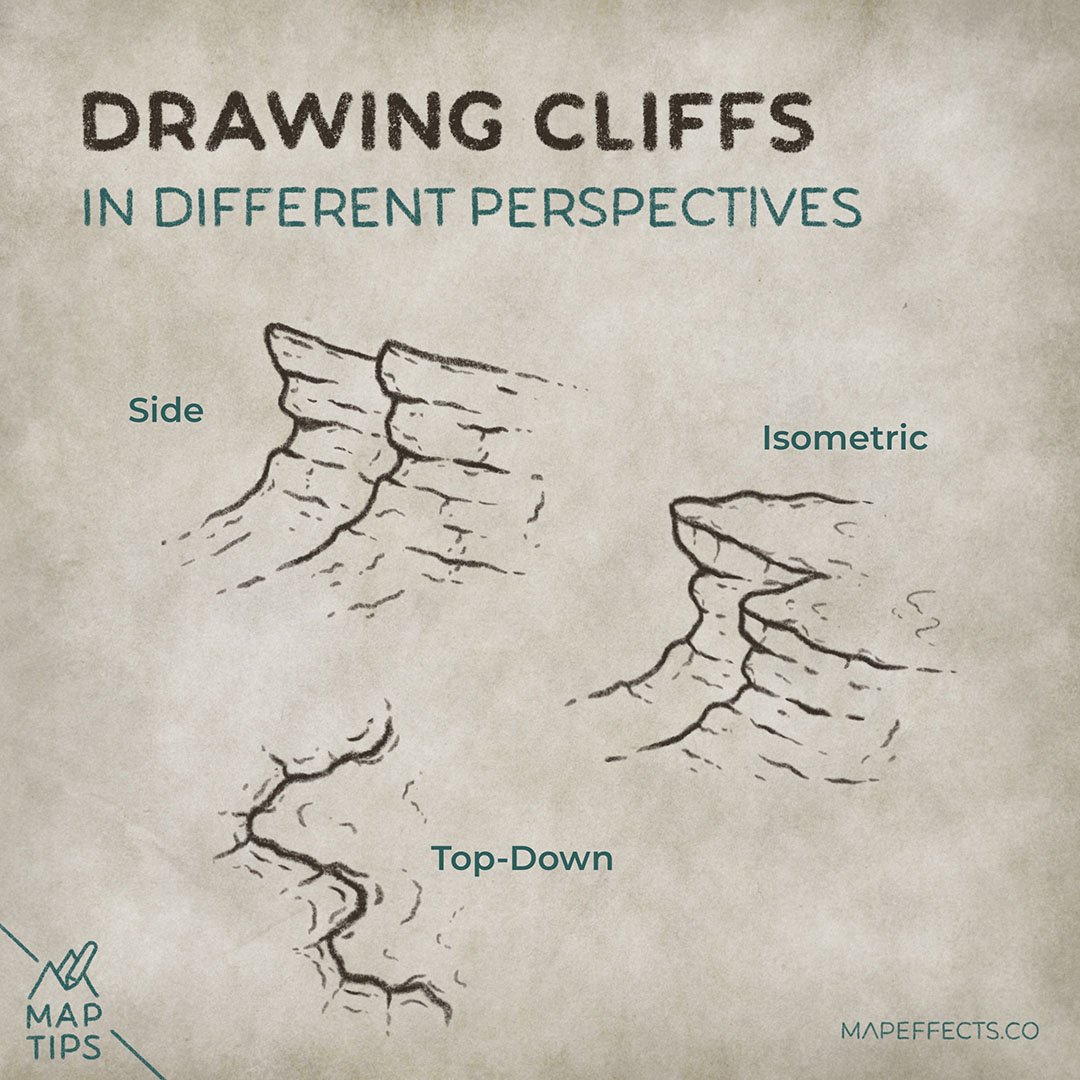
Drawing Cliffs in Different Perspectives
When you sit down to draw a fantasy map for your story, one of the first things to decide is the perspective you’ll use. The most common tend to be isometric and top down, but which should you use? Here we will look at some of the benefits of each using something like cliffs to show some of the differences.

Drawing Deltas on Your Fantasy Maps
Deltas are a key source of agriculture for civilizations due to their nutrient rich soils. One of the key things that allowed Egypt to rise to and maintain power for so long was their acess to the Nile River and it’s delta. Now, lets look at how they form so you can realistically add them to your fantasy maps.
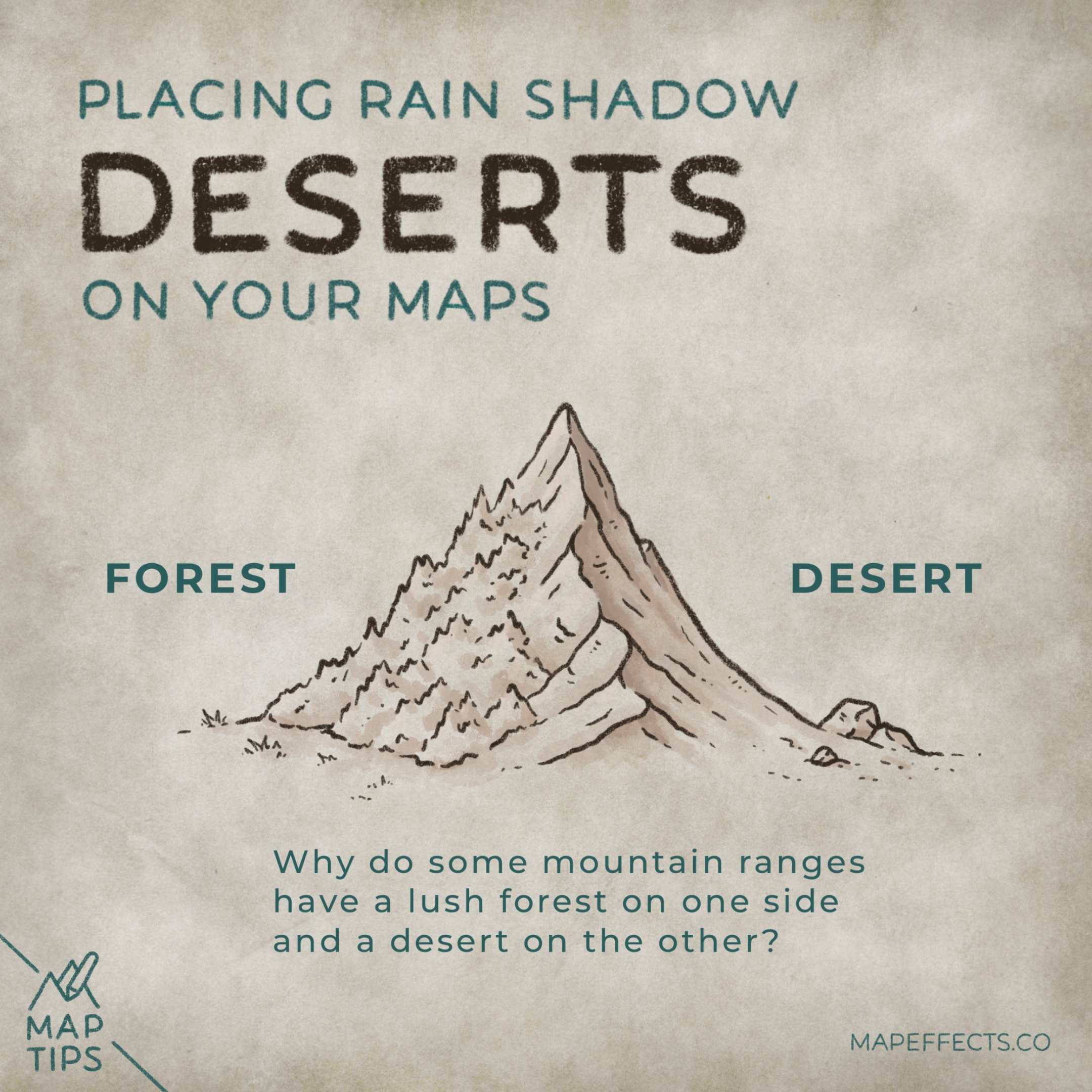
Placing Rain Shadow Deserts On Your Fantasy Maps
Why do some mountain ranges have a lush forest on one side and a desert on the other? In this Map Tip we’ll look at how a rain shadow desert can form so you can draw them on your own maps.

Avoiding Visual Tangents
Visual tangents are one of those things that can creep into your work. The worst part is they draw attention to themselves because they’re by nature distracting. So what are they and how can you avoid them when drawing your fantasy maps?
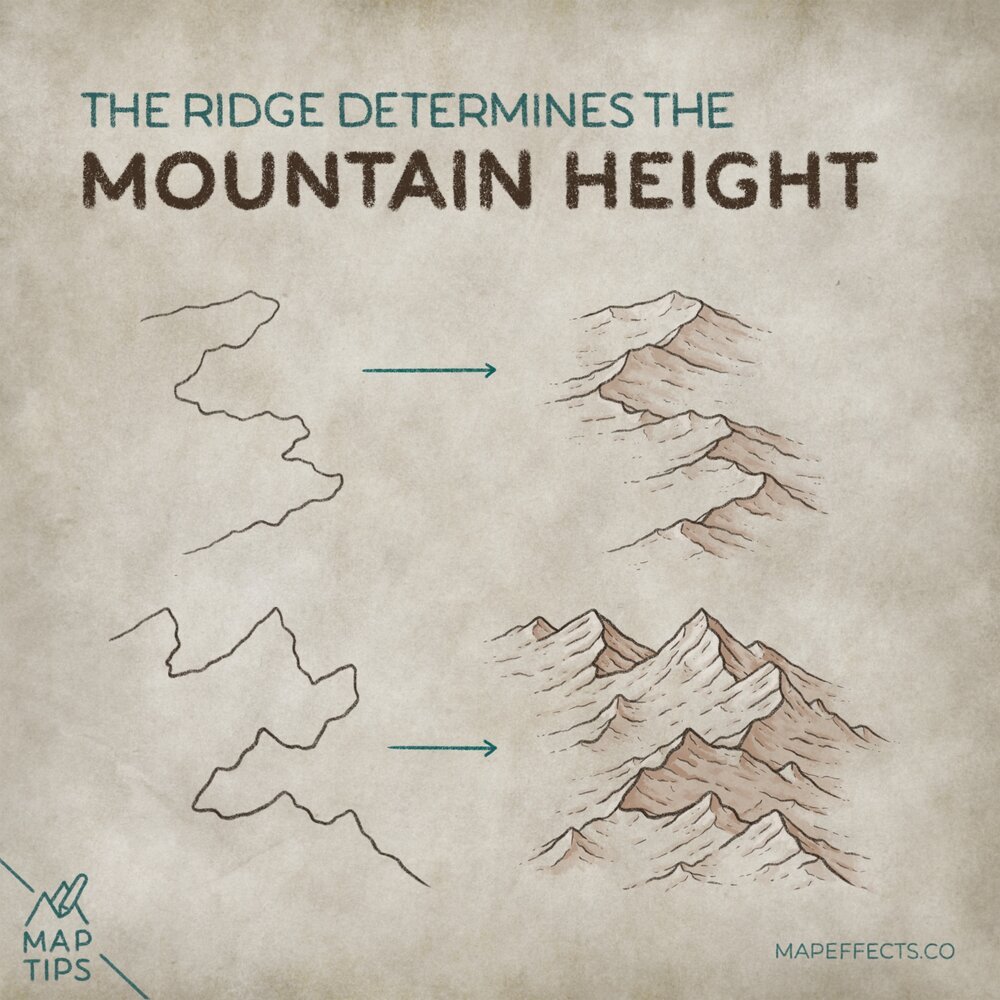
The Ridge Determines Mountain Height
One way to make your fantasy map more believable is to vary the size of the mountain ranges. Not all mountains in our world are the same height, and they shouldn’t be in your story either. If you are using the Ridgeline Mountain Method, then how you draw the initial ridgeline will play a large role in how your mountains look when they’re finished.
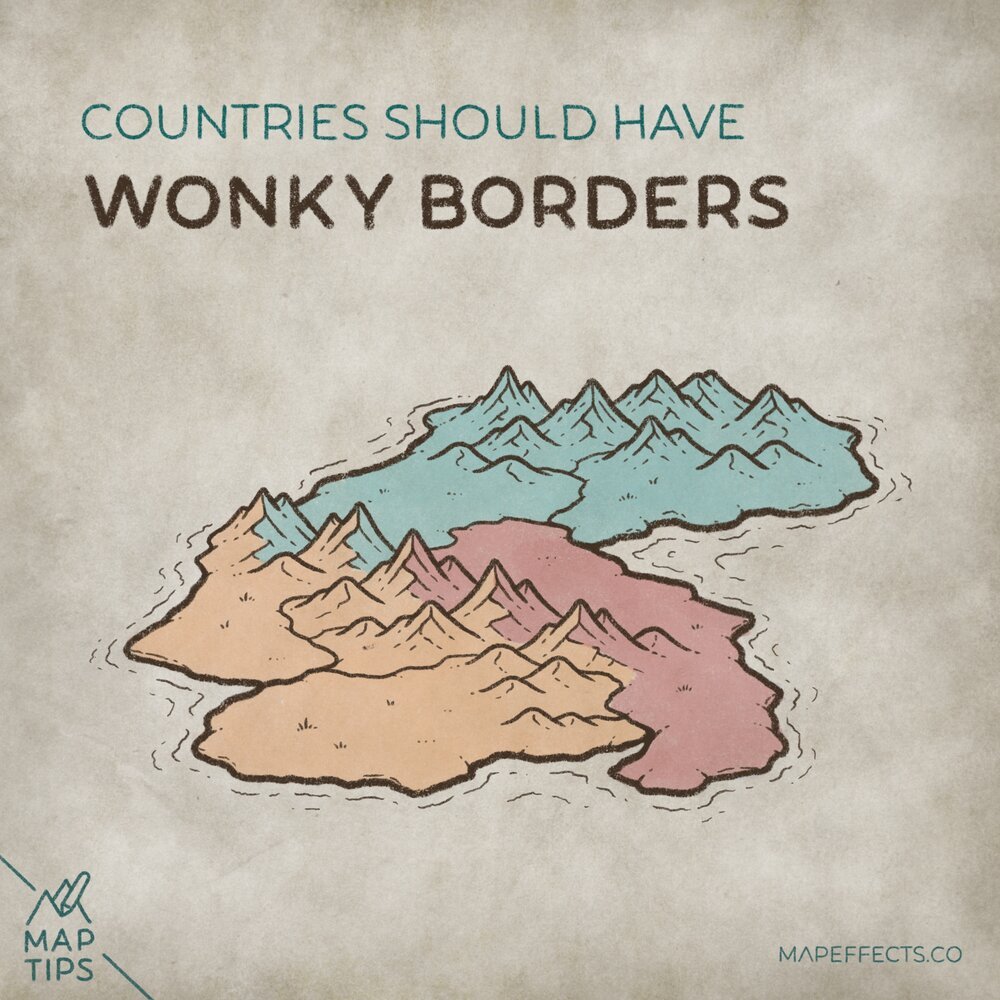
Countries Should Have Wonky Borders
One mistake people often make when drawing maps is they make their borders look like a geometric grid. In reality, this reflects a relatively modern way of thinking. With the ability to see our world from an airplane or even space, we tend to want to divide things up in very clean, simple boxes. But, if you were on the ground and the best you could do was climb a mountain to get a read on the land, then how would you divide up borders?
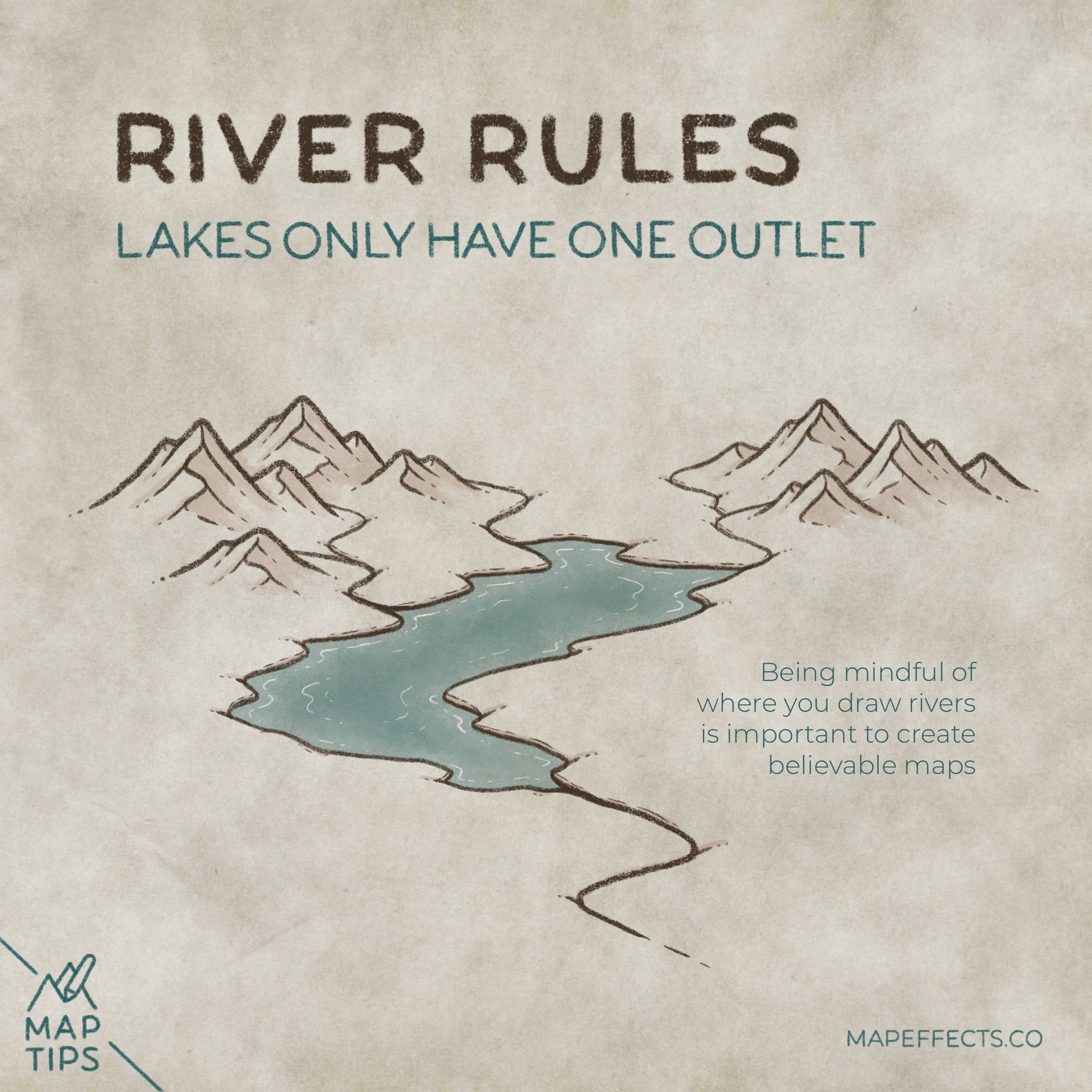
River Rules - Lakes Only Have One Outlet
Rivers are one of those tricky things to draw correctly on a map because they’re almost too familiar; we don’t usually spend much time thinking about how they actually flow through a landscape. In this case, it’s how rivers interact with lakes and how being mindful of this when you draw your maps can go a long way in making your world more believable.
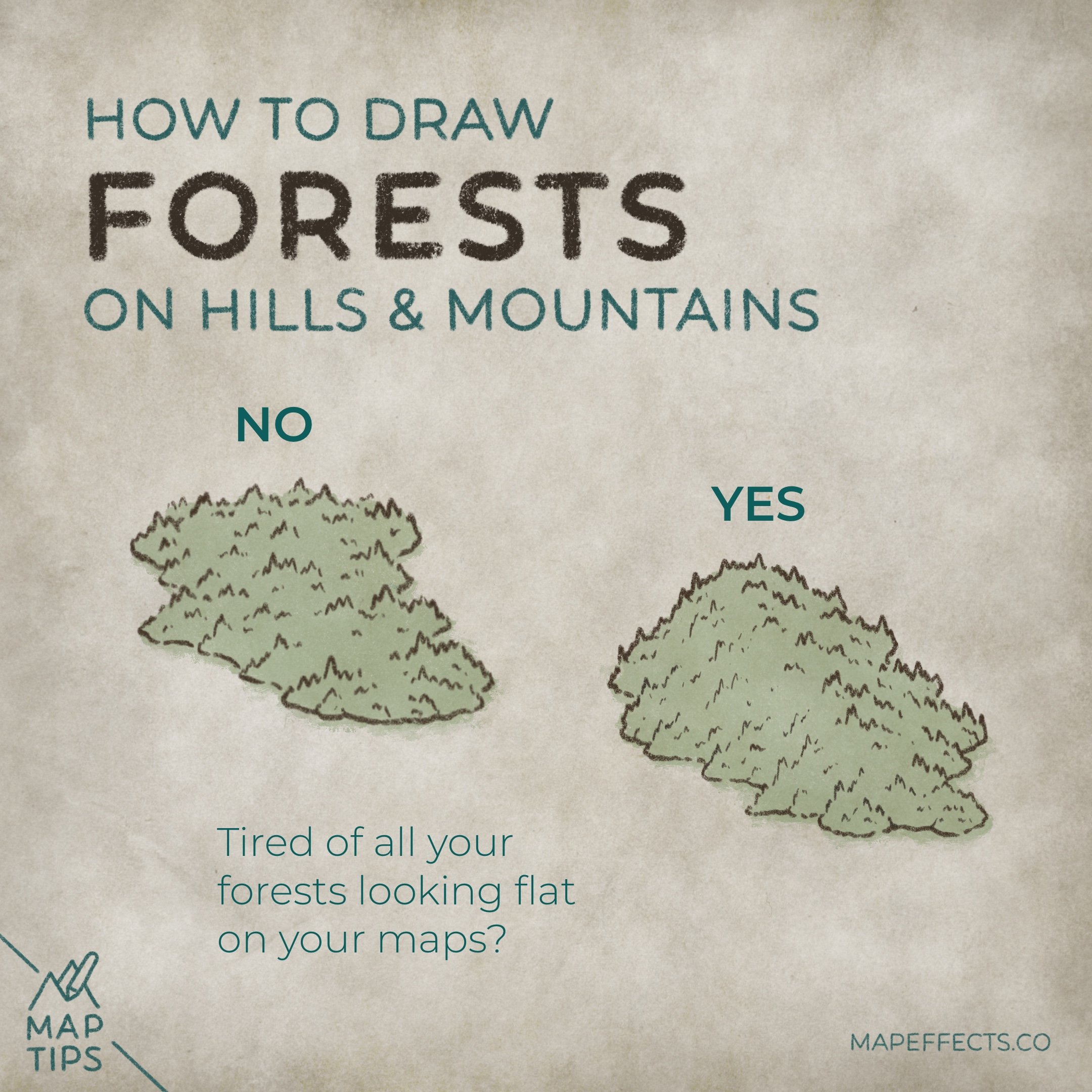
How to Draw Forests on Hills & Mountains
Are you tired of your forests on your fantasy maps looking a little too…flat? This is a common issue and one I know I struggled with for a long time as I was learning. In this Map Tip I’ll give you a couple of simple things you can do to overcome this issue, and draw forests that look like they’re popping off the page just with line art.
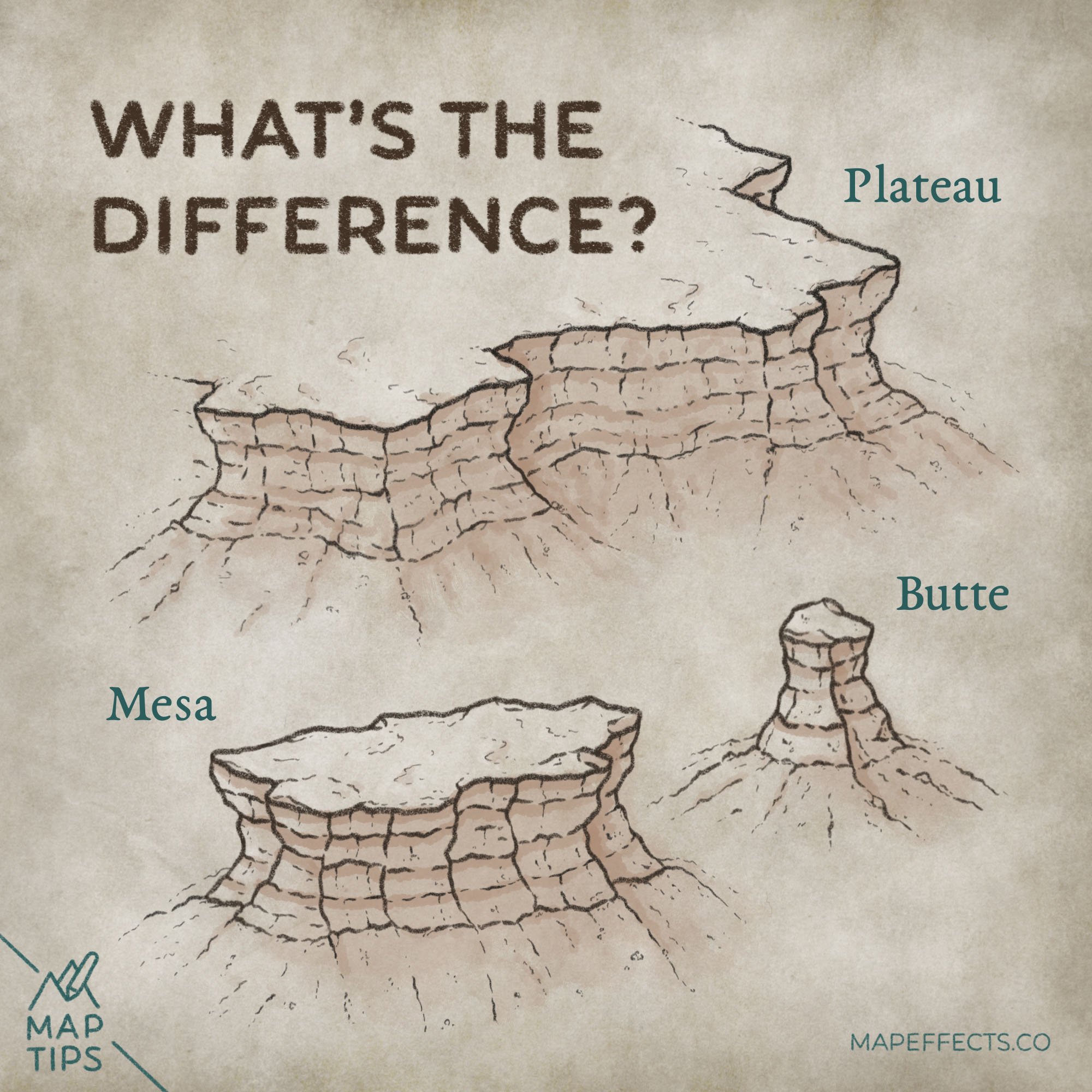
Plateaus, Mesas, & Buttes - What’s The Difference?
Plateaus, mesas, and buttes can look very similar and it can be a challenge to know the difference. Things become even more confusing when you listen to the average person describe these cliff formations, because they’ll often use the names interchangeably. So how can you tell the difference so you know what to name them on your fantasy map? Much of it comes down to the overall size, but there are a couple other things simple things to keep in mind which will help you distinguish them.